Inequality and the ADA
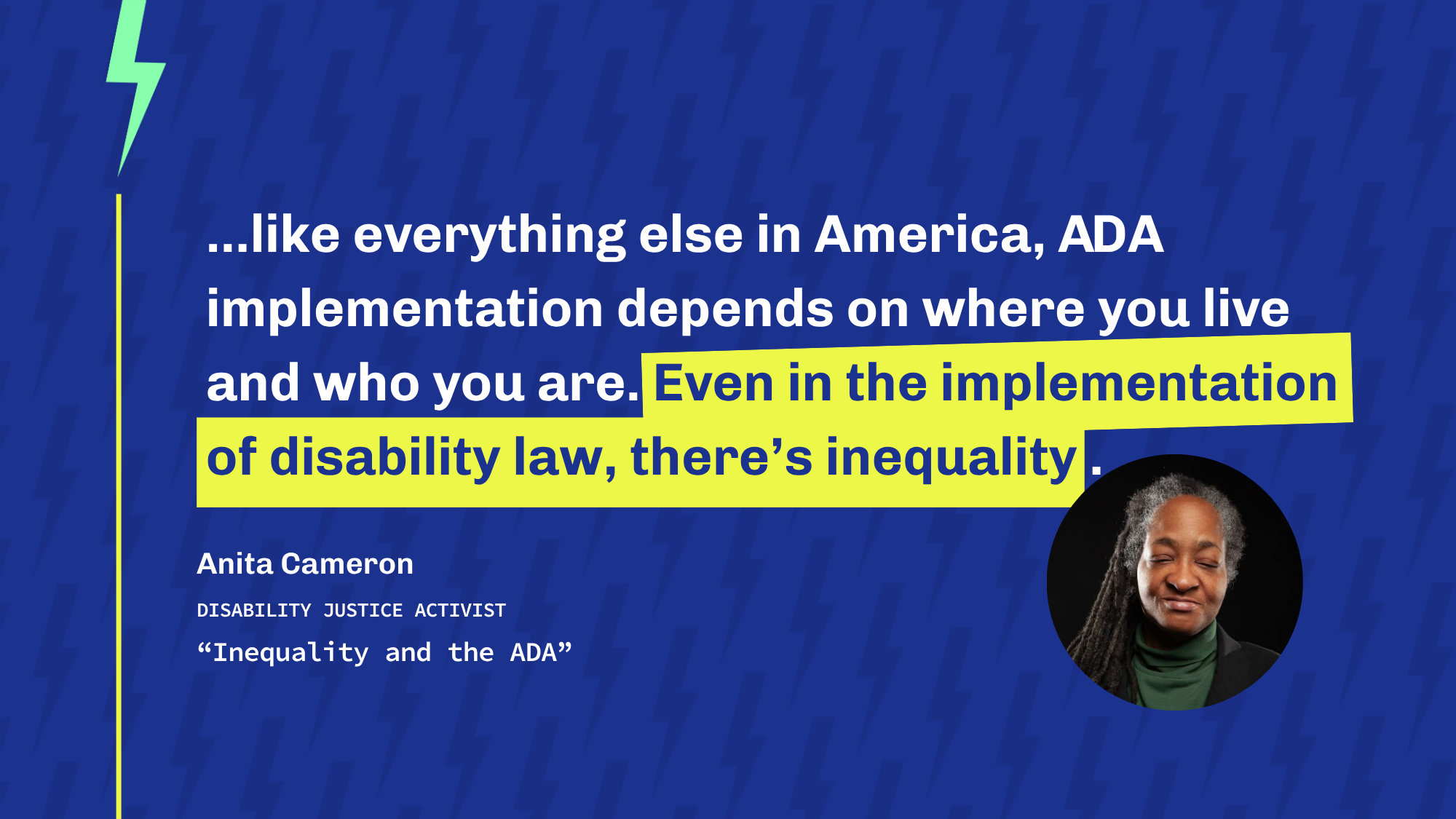
Graphic by Jennae Petersen | Photo by Sean Boose
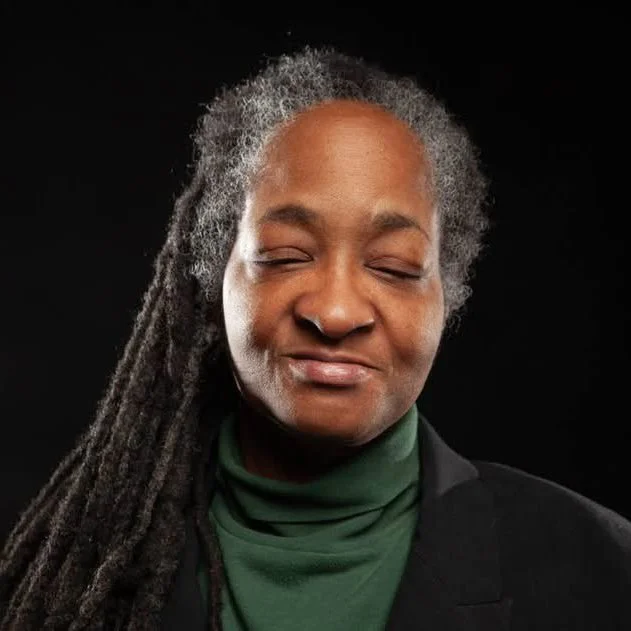
Image Description: The graphic features a quote from Anita Cameron: “...like everything else in America, ADA implementation depends on where you live and who you are. Even in the implementation of disability law, there’s inequality.” Below the quote, Anita Cameron is identified as a disability justice activist, and the title of the accompanying piece is “Inequality and the ADA.” The quote appears in large white text on a deep blue background with a subtle lightning-bolt pattern, accented by a green lightning bolt and thin yellow graphic lines. A small circular color portrait of Anita appears in the lower-right corner, showing her smiling with long gray locs, wearing a green turtleneck and dark jacket against a black background.
The Americans with Disabilities Act (ADA) is landmark civil rights legislation that gives people with disabilities community access in the areas of public spaces, employment, transportation, communication and more.
I, personally, was involved in the fight for the ADA as a member of ADAPT, a national, grassroots disability rights organization known for its in-your-face direct actions and nonviolent civil disobedience. I participated in numerous actions fighting for accessible public transit and public access. I did the historic Capitol Crawl and was one of 104 activists arrested in the Rotunda Takeover, which, to me, was every bit as important as the Capitol Crawl.
Once the ADA was signed into law, I wondered whether it would be applied in equal measure. I wasn’t surprised to learn that like everything else in America, ADA implementation depends on where you live and who you are. Even in the implementation of disability law, there’s inequality.
Racism plays a huge part in disability access and who gets it. This is especially noticeable in the disparities between the accessibility of neighborhoods predominately populated by white people and neighborhoods that are predominately populated by people of color. I encounter it every day where I live. There are broken sidewalks and a lack of curb cuts, making it hard for my disabled neighbors and me to get around. Meanwhile, in the more affluent part of town, where mainly white people live, access is much easier to come by.
Research shows this to be true. A study released in 2022 by the Government Accountability Office found that after analyzing 220,000 miles of heavily traveled streets and highways across the country, “poor communities, urban areas, and those that are home to few white residents are more likely to have potholed, cracked, and rutted roads.”
Thirty-six years after the passage of the ADA, this kind of inaccessibility shouldn’t still be so prevalent in multi-marginalized communities. But it is. And yet too often, we talk about disability and disability issues as if disabled people are all white. We call disability the “Great Equalizer,” but even among disabled people, it’s clear there’s not yet true equality or equity.
This lack of access within neighborhoods contributes to many other disparities, because lack of access to safe navigation is a barrier to opportunity. One such example is the structural racism and ableism at play in trying to find employment. According to a 2025 research brief out of the Burton Blatt Institute at Syracuse University, “people of color with disabilities are less likely to be employed and more likely to be living in poverty than both white people with disabilities and Black and Hispanic people without disabilities.” I have witnessed this myself where broken down sidewalks in Black and Brown communities prevent disabled people from accessing public transportation to get to work.
This lack of access can even be life threatening; I know of at least three individuals who died after being struck by cars because they were forced to wheel in the street due to lack of access. I, myself, have been in this situation numerous times in my neighborhood.
As a Black disabled activist who is known for the work I do within my community, I am sometimes in a position to speak up about inaccessibility and drive change. For example, when I contacted local town officials about sidewalk access in my neighborhood, they took action to fix the problem. But advocacy efforts of disabled people of color still get largely ignored, while white disabled people are more likely to get what they need when they push back.
I know from my time in this movement that civil rights aren’t given. You have to fight to get them, then fight to keep them. But nearly four decades after the passage of the ADA, it is far past time to put an end to the racial inequities in the disability community.