Disabled Women’s Equal Pay Day: Moving From Acknowledgement to Economic Security
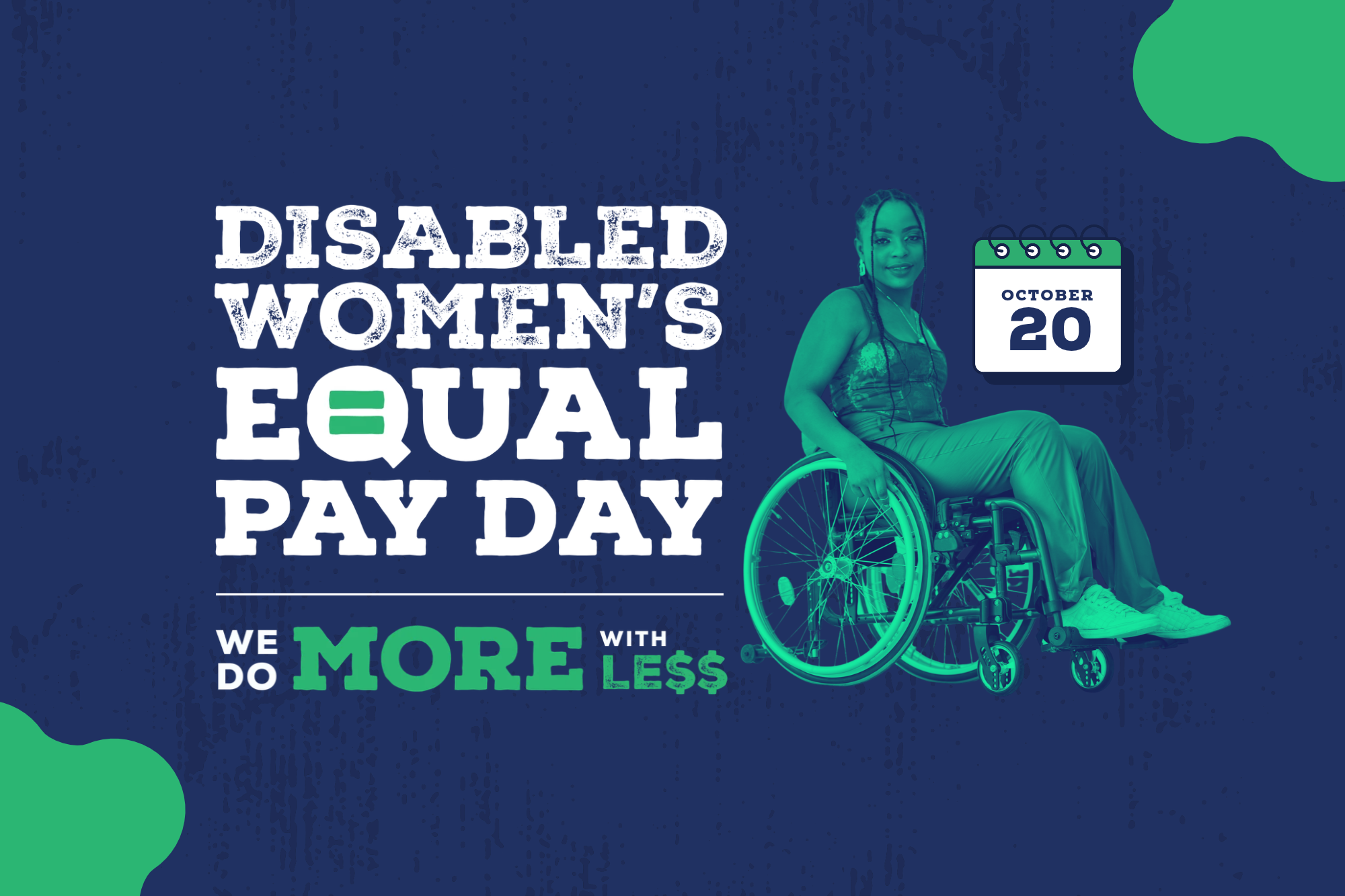
Graphic Credit: Jennae Petersen
Image Description: Text reads, “Disabled Women’s Equal Pay Day. We do more with less. October 20.” The graphic is navy blue with white and green text and green organic shapes in two corners. There is a green-tinted image of a young Black person with knotless braids, a tank top, comfy pants, and white shoes, sitting in a wheelchair. There’s also a simple illustration of a calendar with the date on it.
Families across the country are paying more for everyday necessities. For disabled women, this affordability squeeze often starts with a smaller paycheck.
On October 20, 2026, Disabled Women’s Equal Pay Day will call attention to persistent wage gaps: Disabled women — including part-time and seasonal workers — are typically paid just 56 cents for every dollar paid to nondisabled men. And disabled women who work full time, year-round fare only slightly better, as we are paid just 68 cents on the dollar paid to nondisabled men. But that figure obscures the reality that many disabled women work part time not out of preference, but because the workplace is not designed for us. From inaccessible workspaces and technology to inflexible policies, too many jobs make it difficult for disabled women to work the hours we want and need.
Being paid $24,000 less each year than our nondisabled male counterparts leaves less room in monthly budgets even before factoring in disability-related costs. Even an ordinary commute can come with unexpected and additional costs. For example, when an elevator at a train station is out of service, a disabled worker may have to pay a premium for a rideshare she did not plan to take. That unexpected expense can add to the out-of-pocket costs for personal assistance that makes work and independent living possible. In 2023, 83% of working disabled adults had at least one disability-related out-of-pocket expense, spending 10% of our annual income on average to meet those needs. These expenses compound the financial strain of the wage gap, leaving disabled women to do more with less.
Black disabled women face an even wider gap. We are typically paid just 50 cents for every dollar paid to white nondisabled men. Lower wages, rising prices, and disability-related expenses leave even less room for a surprise bill, fewer hours at work, or time without a paycheck.
Disabled Women’s Equal Pay Day falls during National Disability Employment Awareness Month, which recognizes the impact of disabled people in the American workforce. This year’s theme, set by the U.S. Department of Labor, is “Celebrating Value and Talent,” recognizing the skills and contributions disabled people bring to workplaces, communities and the economy.
But recognition and celebration are not the same as setting meaningful workplace standards for disabled workers and holding employers accountable for meeting them. For disabled women who want to and are able to work, that means creating jobs that pay fairly, maintaining safe workplaces where we can advance our careers, and providing supports that make employment possible. It also means recognizing the labor that doesn’t appear on a paycheck. Disabled women need time to care for ourselves and loved ones, too.
The path forward to close the wage gap is clear: Congress must use its oversight authority to enforce fair pay and civil rights protections. Lawmakers must also ensure workers have access to paid leave and paid sick days, restore and expand home- and community-based services that support employment and independent living, and modernize public benefit rules so earning more or building savings does not put essential supports at risk.
These solutions must reflect the reality that disabled women are too often expected to do more with less. We carry both paid and unpaid labor while navigating lower wages, higher disability-related costs, and an affordability crisis that makes it harder for families to meet basic needs. Work should expand economic security, not become another condition people must continually meet just to remain stable.
A good job can provide income, opportunity, and greater independence. But economic stability should not depend on how much paid work a disabled woman can sustain, especially in an economy that relies on so much unpaid care.
This Disabled Women’s Equal Pay Day, 56 cents should command our attention, but it should not be the end of the conversation. The policies we champion must do more than simply acknowledge the wage gap. Disabled women deserve lasting economic security without asking us to keep doing more with less.