Disability Doesn’t Exist In a Vacuum
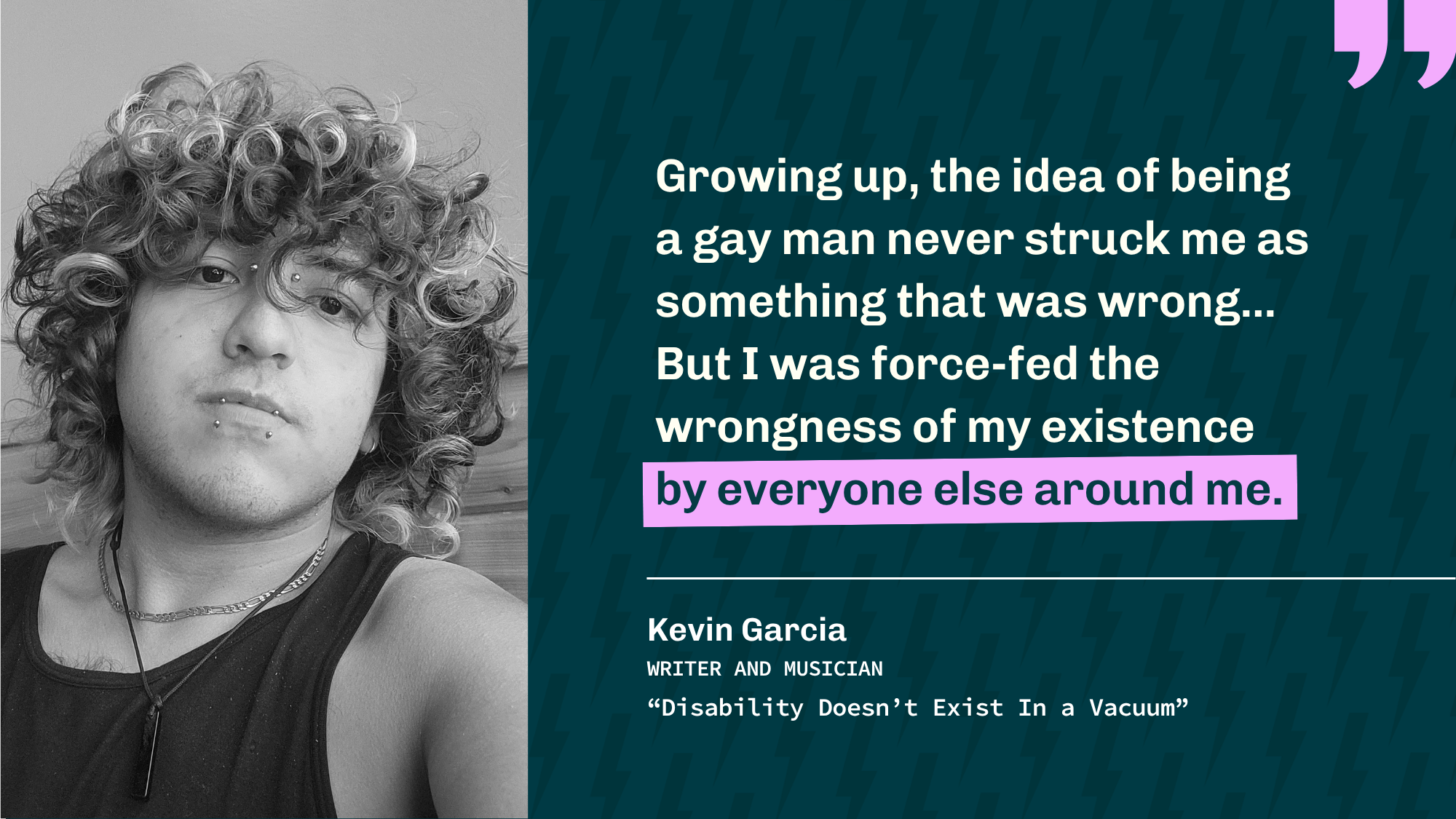
Image Credit: Jennae Petersen
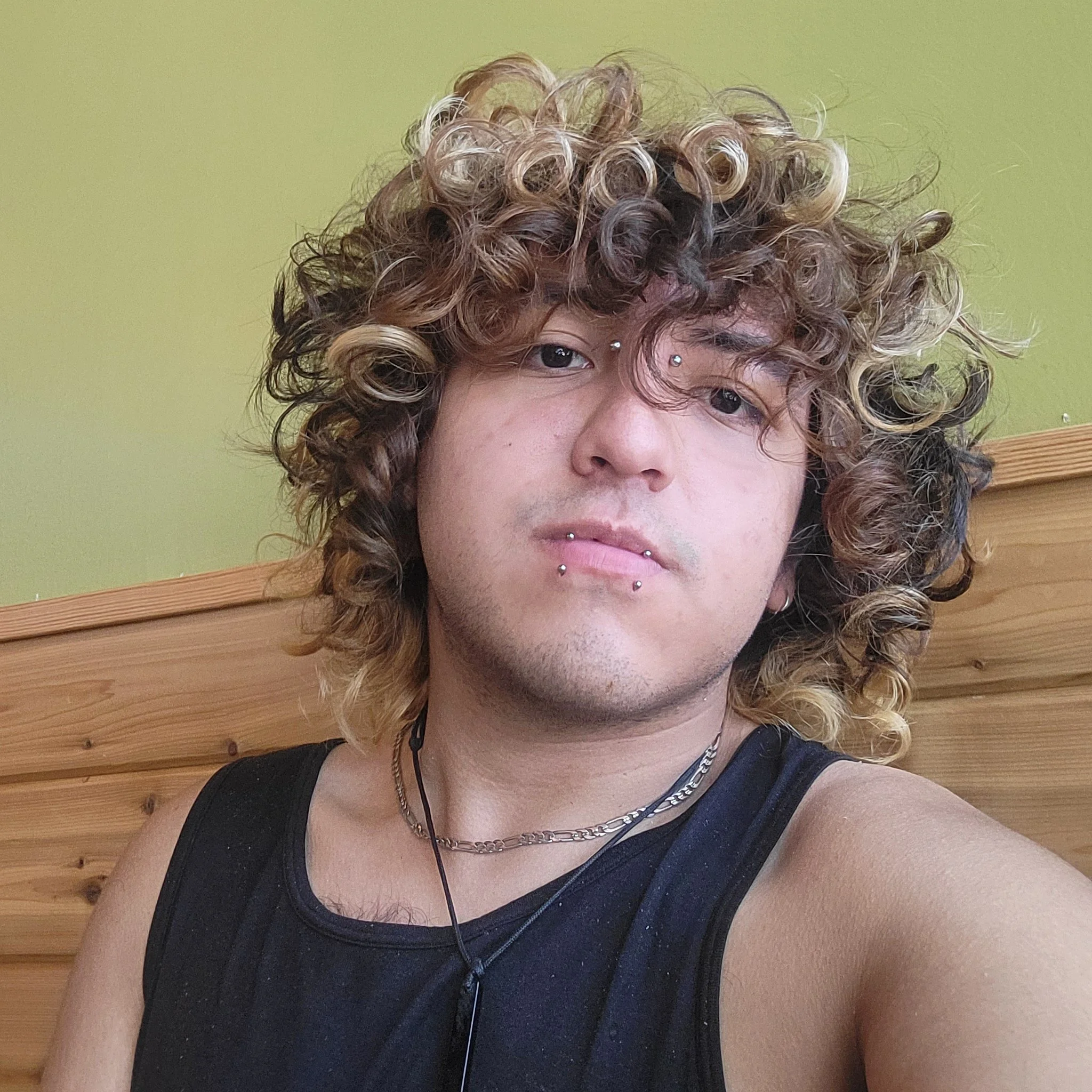
Image Description: Graphic with text that reads: “Growing up, the idea of being a gay man never struck me as something that was wrong... But I was force-fed the wrongness of my existence by everyone else around me.” Below the quote, the graphic identifies Kevin Garcia as a writer and musician. At the bottom, the title of the accompanying piece reads, “Disability Doesn’t Exist In a Vacuum.” Graphic features a black-and-white portrait of Kevin Garcia, a man with curly shoulder-length hair with light highlights, facial piercings, and a black tank top, looking directly at the camera. The portrait appears on the left. On the right, a dark teal background with a subtle lightning-bolt pattern displays a large quotation, with the final line highlighted in pink. A large pink quotation mark appears in the upper-right corner of the graphic.
I never fit in at school. I was frequently singled out and seldom welcomed, whether by my peers or by the adults in charge. At first I didn’t understand the mistreatment, because I did everything right: I went to school every day with a smile on my face, and I talked to my classmates.
The teachers would pull me aside and yell horrible things in my face, like that I had to keep my mouth shut at all times, and that I would never have any friends. My peers froze me out and ridiculed me in class — with the teacher’s approval. Then, the abuse became physical. They’d slap the glasses off my face and hurl words like “faggot,” at me. I didn’t know what to do, because I was just a ten-year-old kid growing up in Houston, Texas.
After a while, I stopped smiling. Sometimes I cried, but that was only a signal for them to hurt me further. I don’t think I ever had the chance to properly experience empathy in a social context as a child; I didn’t have support at home, and nobody tried to stick up for me. I reached out to school counselors and never heard back from them. Every time I was singled out, the whole class joined in unison.
School left me with an education, but it also left me with CPTSD. That’s to say: I was abused to the point of disability for being gay.
You probably feel uncomfortable confronting the reality of abusing a queer person to the point of disability in the form of a CPTSD diagnosis. As for me, this was the reality I had to endure. Growing up, the idea of being a gay man never struck me as something that was wrong; I never conformed to any standard definition of masculinity, and that never made me uncomfortable within myself. But I was force-fed the wrongness of my existence by everyone else around me. It was a profoundly surreal experience to come to terms with, because being queer just came so naturally to me.
Growing up as a gay teen with a heart full of yearning felt different from the journey most of my peers were taking. For me, uniquely, feeling love and affection was wrong: the boys I doted on were the same boys that looked at me with contempt and disgust.
Growing up alongside homophobia permeated my relationships, impacted how I expressed emotions, how I saw myself, and how (un)safe I felt.
This all culminated during the first year of my undergraduate classes when I went through a debilitating episode of then-undiagnosed CPTSD. The stress was unbearable, I struggled to find the courage to swallow the food I could barely stomach, and my memories kept me awake every night. Every day, I’d go to class and stare off into space in a dissociative haze.
I couldn’t escape the feeling that everyone hated me. Sometimes I was mistreated, and that made me spiral. Other times, I was welcomed, but mundane things still triggered me. It felt, all the time, like I was being attacked by a tsunami of hatred. These feelings lingered long after my traumatic childhood ended.
The second I got home from class, I would shut the door behind me and curl into a fetal position, chain-smoking cigarettes until the pain went away. I was living in the past and present at the same time, and my body couldn’t tell the difference between the two.
Living with trauma from queerphobia made each day a trial to overcome. I had internalized shame and guilt and felt estranged from people around me. My triggers were excruciating, causing my mind and body to cascade into a variety of symptoms that left me unable to properly function until they subsided.
But I didn’t have to face it alone. I found a queer therapist who related to my experiences and diagnosed me with depression, anxiety, and CPTSD. They gave me the tools to heal. It’s thanks to them that I’ve grown into the person that I am today: bold, unyielding, and phenomenal.
I'm not the only gay man with CPTSD, and I’m not the only queer person with that diagnosis, either. Queerphobia and trauma go hand-in-hand, and that trauma is disabling. It’s the combat fatigue we experience from fighting for our lives every day.
In the end, I never changed my identity. I never conformed to anyone’s standards. I was always gay, and I still am. I’ve faced the worst of alienation and survived. I found queer friends and learned to express myself through art and writing. I’ve found freedom after realizing that I’m stronger, and that nobody will ever be able to shame me again.