Autistic Pride Day and the Power of Belonging

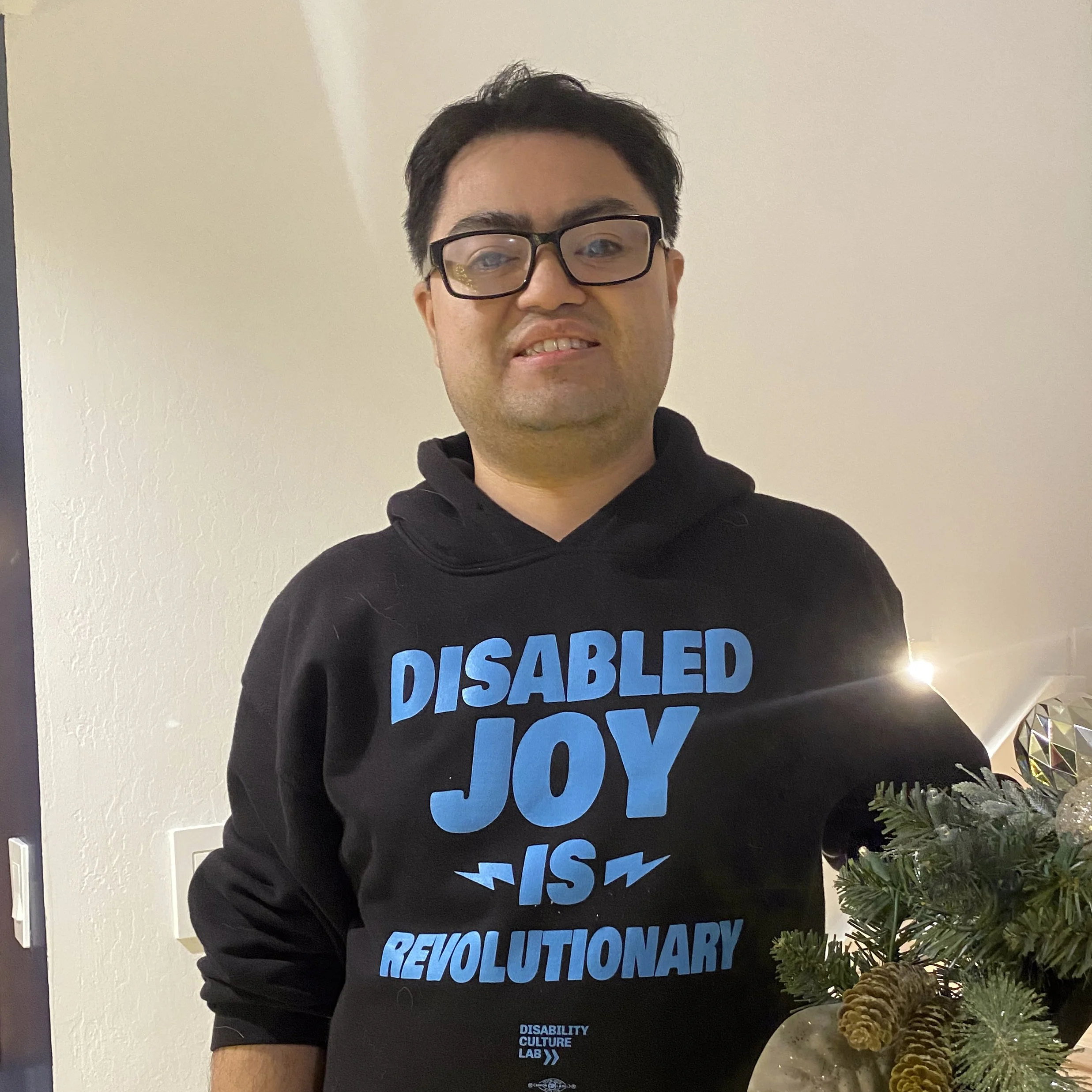
Photo Credit: Dennis Tran
Image Description: Dennis Tran sits on a couch indoors, smiling and pointing with both hands toward the message on his black T-shirt. The shirt features a red brick wall graphic with the words “Build Disability Community Power” in bold white text. Decorative pillows surround him, and a patterned curtain with floral designs and bicycle illustrations hangs in the background. The image conveys disability pride, community building, and collective empowerment.
Long before I had language for autism, I knew what it felt like to navigate spaces where I didn't quite fit. I often felt like I was missing a set of unwritten rules everyone else seemed to understand.
Growing up in a Vietnamese immigrant household didn’t help. I was taught early to not complain, work hard, and be perfect, which rarely left room for me to express myself, tend to my mental health, or connect with my own emotions and organized chaos in life.
I learned to observe. To adapt. To mask.
Like many autistic adults, I became skilled at hiding parts of myself to belong. I’d play stoic so people didn’t think that I was too emotional or “girly” for a guy. I’d decline to share about my special interest for fear of dismissal. And I’d fight not to stim or do repetitive tasks because they made me feel like I was awkward and disruptive to others.
As a queer, partially-blind youth, family conversations about disability, mental health, and neurodivergence were often shaped by stigma, survival, and limited understanding. Success was measured by how well I could push through challenges rather than talk about them. Differences were something to manage quietly rather than embrace openly.
For years, I internalized the belief that my struggles were personal shortcomings. I blamed myself for social difficulties, sensory overwhelm, burnout, and feeling disconnected from peers. I thought I simply needed to try harder to fit in and be “normal” rather than being my authentic self. Those pressures came from my cultural upbringing, the model minority myth, and societal and peer pressure to adapt to neurotypical norms.
Receiving my autism diagnosis in my late twenties didn't change who I was; it changed how I understood myself. I began to reframe the parts of me I once viewed as flaws — my deep empathy, creativity, strong sense of justice, pattern recognition, and desire for authenticity — as part of how my autistic mind and body engaged with the world. The more I learned about autism, the more I learned about myself, leading me to a deep sense of pride.
But before pride, came grief: for the years spent masking; for the support I didn't receive; for the younger version of myself who believed his struggles to fit in were failures rather than reflections of a world that wasn’t designed with neurodivergent people in mind.
Many late-identified autistic adults I’ve encountered carry similar stories. We often spend years trying to fit into environments that ask us to suppress our needs, question our instincts, and measure our worth through neurotypical expectations. By the time we discover we are autistic, we are often left untangling years of misunderstanding, self-doubt, and internalized ableism.
Yet somewhere along that journey, grief can become something else.
It can become self-compassion.
It can become a community.
It can become pride.
For me, that happened when I connected with a therapist, coach, mentor, and friends who all shared my lived experiences and cultural background and were also late-diagnosed autistics. They helped me embrace myself. My pride initially came through support, representation, and feeling less alone. Since then, it has been connected to opportunity and deepening my relationships with people with multiply-marginalized identities who helped me see who I am now and who I am becoming.
Autistic Pride Day is often misunderstood as a celebration of autism that refuses to acknowledge the challenges autistic people face. But pride is not about pretending that barriers do not exist. Autistic people continue to face disparities in employment, education, healthcare, housing, and community inclusion. Many autistic people, particularly those who are otherwise disabled, LGBTQIA2S+, people of color, immigrants, or individuals with higher support needs, experience multiple layers of marginalization.
Autism pride does not erase those realities. Instead, it rejects the idea that our value is determined by how closely we can conform to systems that were never built with us in mind.
Pride means recognizing that autistic people deserve dignity, belonging, accessibility, and self-determination. It means acknowledging that autistic ways of thinking, communicating, creating, and connecting have value. It means moving beyond awareness and toward acceptance, inclusion, and justice.
As we celebrate LGBTQIA2S+ Pride Month and reflect on the recent close of AANHPI Heritage Month, I am reminded that none of our identities exist in isolation.
My experiences as an autistic person cannot be separated from my experiences as a queer person, as a disabled person, or as a Vietnamese American. Each part of my identity shapes how I move through the world and how I understand belonging.
That understanding has also shaped my advocacy and storytelling. Whether I am speaking about disability justice, consulting on representation, creating films, or building community, I carry with me the belief that people deserve to see themselves reflected in the stories we tell and the spaces we create.
Representation matters because belonging matters. Community matters because none of us is meant to navigate these journeys alone. And pride matters because so many of us grew up believing we had to earn our place in the world by hiding parts of ourselves.
Autistic Pride Day reminds us that autistic people do not need to be “fixed” to be worthy. We do not need to mask to belong. Our productivity does not determine our value, our ability to blend in, or how closely we resemble someone else’s idea of normal.
We belong because we exist.
And perhaps that is what every pride celebration is ultimately about — not becoming someone new, but finally permitting ourselves to be who we have been all along.